Looking for a smarter way to invest in Las Vegas condos without making the resort corridor your full-time home base? Southern Highlands gives you a different kind of advantage: a more residential setting with everyday convenience, while still keeping you within reach of the Strip and other vertical-product opportunities across the valley. If you are weighing a home base in Southern Highlands while exploring condo or hotel-condo investing elsewhere in Las Vegas, this guide will help you understand the tradeoffs, rules, and due diligence that matter most. Let’s dive in.
Why Southern Highlands Works as a Base
Southern Highlands is a 2,299-acre master-planned community in the southern Las Vegas Valley, generally bounded by I-15, Cactus, Jones, and Larson. It is often described as being about 15 minutes from the Strip, which can make it appealing if you want suburban living while staying connected to Las Vegas condo and hotel-condo markets.
That balance matters if you want your primary residence and your investment strategy to serve different purposes. You may prefer a lower-density home environment for day-to-day life, while using a separate condo or hotel-condo as the more investment-focused part of your real estate plan.
Southern Highlands Lifestyle Advantages
Southern Highlands offers a strongly residential amenity mix. The community features seven parks, the Paseo hiking and biking trail, dog parks, walking paths, tennis and basketball courts, and a private golf club.
Nearby retail and service options add to the convenience. Residents have access to grocery stores, dining, banking, urgent care, dentistry, and hardware close to home, which can make daily life easier if you do not want to be centered in a high-traffic resort area.
The community also states that HOA assessments help fund park and common-area upkeep, along with 24-hour roving security patrol. For many buyers, that supports the appeal of using Southern Highlands as a stable residential anchor while keeping investment properties in a separate location.
Housing Variety Supports Flexibility
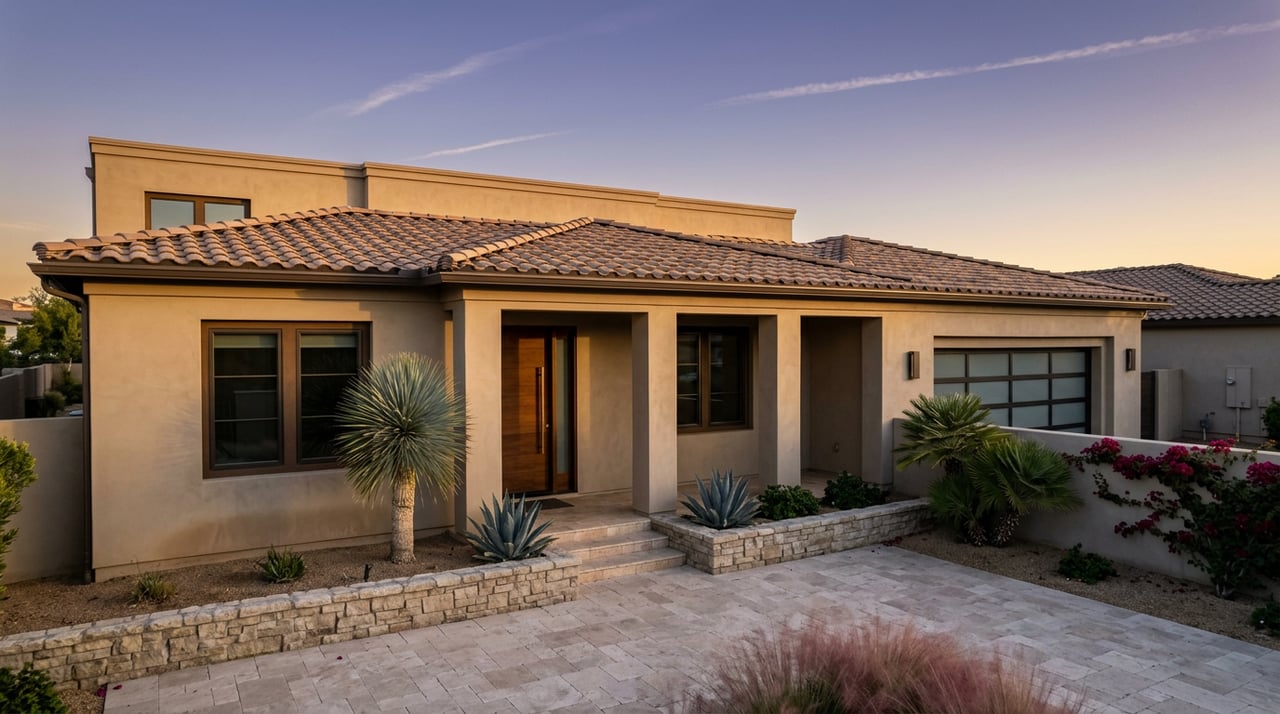
Southern Highlands includes more than 20 communities, along with custom lots and a mix of existing and new homes. That variety gives you options if you want a primary residence that fits a lock-and-leave lifestyle, a larger home footprint, or something in between.
From an investing perspective, this flexibility can be useful. Instead of expecting one property to do everything, you can separate your goals: a livable home base in Southern Highlands and a condo or hotel-condo selected for its building rules, fee structure, and intended use.
Why Condo Investing Is Different
Nevada Condo Ownership Basics
A condominium in Nevada is part of a common-interest community. That means ownership of your unit is tied to shared responsibility for real estate taxes, insurance premiums, maintenance or improvement of common elements, and related expenses.
The association’s executive board handles day-to-day operation and maintenance, while the governing documents, including CC&Rs and bylaws, govern how the property is used. In practical terms, your investment decision is not just about the unit itself. It is also about the association, the documents, and the financial structure behind the building.
How That Compares to a Detached Home
A detached home in Southern Highlands can still sit within an HOA, but ownership usually works differently from condo ownership. In a house, you generally carry more responsibility for the property-specific upkeep.
With a condominium, more building-level responsibility shifts to the association. Nevada also requires reserve studies every five years, and association property insurance for condos and townhomes must include damage to the unit itself in certain cases, though not personal property or owner-added improvements.
Hotel-Condos Add Another Layer
Nevada’s Condominium Hotel Act covers a more specialized type of ownership. A condominium hotel can include separately owned portions, a defined hotel unit, a transient rental program for residential unit owners, and common elements controlled by an association.
That structure can appeal to investor-minded buyers, but it comes with extra complexity. The Nevada Real Estate Division warns that condo-hotel ownership still involves assessments, use restrictions in the governing documents, and the possibility of special assessments for extraordinary expenses.
For that reason, a Southern Highlands residence and a hotel-condo investment can play very different roles in your portfolio. One may be about comfort and consistency, while the other is more document-driven, fee-driven, and operationally specific.
Rental Rules You Need to Check First
Short-Term Rental Rules in Clark County
If you are hoping to generate short-term rental income from a Las Vegas condo, you need to verify the local rules before you assume the property can be used that way. In unincorporated Clark County, short-term rentals for 30 days or less must be licensed as commercial businesses under the county’s AB 363 ordinance.
Clark County requires a business license before a property may be advertised or rented for 30 days or less. The county also limits each natural person or entity to one licensed short-term rental unit in residential areas, subject to a one percent cap, a 1,000-foot separation between licensed rentals, and a 2,500-foot separation from resort hotels.
Occupancy rules matter too. Clark County states that maximum occupancy is two persons or fewer per bedroom, or 10 persons per unit, whichever is less.
Condo Eligibility Is Narrower
For condominium or multifamily units, the rules are even tighter. Clark County says a condo can qualify only if the governing documents expressly allow short-term rental or transient lodging and only if the rental count remains at 10 percent or less of the building.
If the property is in an HOA or master-planned community, the county also requires proof that the governing documents expressly allow short-term rental or transient lodging. Apartments are prohibited, and multifamily dwellings that exceed the 10 percent threshold are not allowed.
HOA Approval Still Matters
Nevada HOA guidance uses the term transient commercial use for stays of less than 30 consecutive days. Under that guidance, the use is allowed only if the governing documents and master association do not prohibit it, the executive board approves it, the property is properly zoned, and any required local license is obtained.
Associations may also impose added requirements or fees. So even if a location seems attractive on paper, not every Strip-area or Las Vegas condo should be treated as a nightly rental opportunity.
Due Diligence for Condo Buyers
Review the Resale Package Carefully
One of the most important steps in a Nevada condo purchase is reviewing the resale package. Nevada says this package can include the declaration, bylaws, rules, monthly assessment and unpaid-obligation information, the current operating budget, year-to-date financial statement, reserve summary, judgments or pending legal actions, and transfer-fee disclosures.
That information can tell you a lot about the health and risk profile of the building. Before you buy, you want a clear picture of the association’s finances, current rules, and any issues that could affect ownership costs or future use.
Know the Condo-Hotel Disclosure Process
For condominium hotels, buyers generally receive a public offering statement or resale package. Nevada also says buyers usually have a 5-day cancellation right.
That window is important, but it is not a substitute for preparation. You still need to understand how the project is structured, what the fees cover, and what the documents say about rentals, owner use, and shared expenses.
Pay Attention to Reserves and Special Assessments
Reserve funding can have a major effect on the long-term ownership experience in a condo or hotel-condo. Nevada requires HOA reserve studies every five years, and associations are expected to manage common-element funding accordingly.
You should also pay attention to the possibility of special assessments. Condo-hotel owners are responsible for assessments tied to common elements and shared components, and those fees can rise or be supplemented by special assessments when extraordinary expenses come up.
Insurance Is Part of the Math
Insurance works differently in vertical product than it does in a detached home. Nevada states that association property insurance for condos and townhomes must include damage to the unit itself in certain cases, but not personal property or owner-added improvements.
That means you need to understand what the association covers and what you may need to insure separately. It is a key part of comparing a Southern Highlands home base with a condo or hotel-condo investment.
A Practical Strategy for Southern Highlands Buyers
If you are considering Southern Highlands as your home base, it can help to think in terms of role separation. Your residence may serve your lifestyle, daily routine, and long-term housing needs, while your condo or hotel-condo investment is evaluated on building governance, fees, reserves, insurance, and rental rules.
That approach can bring more clarity to your search. Instead of asking one property to deliver suburban comfort, flexibility, and short-term rental potential all at once, you can choose the right property for each goal.
For many buyers, that is where local market knowledge becomes valuable. Southern Highlands and Las Vegas vertical product are connected by geography, but they operate very differently in practice.
If you want help comparing Southern Highlands homes with Las Vegas condo or hotel-condo opportunities, Ike Prinsloo brings boutique guidance backed by deep experience in both vertical product and select luxury suburban neighborhoods.
FAQs
Is Southern Highlands a good home base for Las Vegas condo investing?
- Southern Highlands can work well as a residential base because it offers a suburban setting, community amenities, varied housing options, and access to the Strip area in about 15 minutes.
How is Nevada condo ownership different from owning a house in Southern Highlands?
- Nevada condo ownership is part of a common-interest community, so your ownership is tied to shared expenses, association governance, governing documents, and building-level responsibilities that differ from a detached home.
Can you use any Las Vegas condo as a short-term rental investment?
- No. In Clark County, short-term rental use depends on licensing, zoning, county rules, occupancy limits, and whether the governing documents and association expressly allow that use.
What should you review before buying a Las Vegas condo investment property?
- You should review the resale package carefully, including the declaration, bylaws, rules, assessments, budget, financial statements, reserve summary, and any disclosed legal or fee issues.
What makes condo-hotel investing in Las Vegas more complex?
- Condo-hotel ownership can involve assessments, shared common elements, possible transient rental programs, use restrictions in governing documents, and the risk of special assessments for extraordinary expenses.
Why do reserve studies matter for Nevada condo buyers?
- Reserve studies matter because Nevada requires them every five years, and they help show how an association plans for repair and replacement costs tied to common elements.